Nov 10, 2011
Non-Attachment & Practice: Sustainability or Letting Go
‘There is joy in losing everything, in giving everything. You cannot be eternally happy by possessing things. That’s why we say, ‘Have vairagya, have dispassion, have non-attachment.’ By renouncing worldly things, you possess the most important sacred property: your peace.” (Sri Swami Satchidananda from his translation and commentary of The Yoga Sutras of Patanjali)
Letting go is not always easy. Sometimes there are more things to consider than just having a minimalist house for aesthetic and functional value and to feel freer in life. One thing that can complicate the decision is when we consider that while letting go will benefit us in some ways, it may also harm the environment or seem wasteful. Whether to use an item in a creative way as to not add to the landfill, thereby keeping new items or whether to donate, knowing that if a thrift shops deems it not sale-able and ends up throwing it out anyway is a struggle that I sometimes face. I have visited thrift shops that I donated items to, and I see some of my items and not others. This makes me wonder what happened to the items they did not find fit to sell? This has made me hold on to some items, particularly clothing because I can sew, and think to myself that I will remake it into something. The problem is that often times, it is a clothing in a color or fabric that is not flattering or that I have an allergic reaction to (polyester, wool), and frankly, I don't have the time to sew all these projects. Therefore, I will not end up using it, and it just stays in my home, making me feel guilty for wasting money and not being able to reuse the item. With cotton items, I always think to myself that I could make a bedspread, but I already have 2 sets of bedspreads, and I'm trying not to have excessive possessions, so do I really need another one? The answer is no, and neither do most of my friends or loved ones because let's face it, most of us have too much in this country. I have donated and even thrown out a lot of my possessions since I first started the journey of voluntary simplicity. I certainly don't have as much as others, but I don't think I can myself a minimalist as I used to feel I was. The guilt of holding on to these things that I can't use or that others can't use makes me so stressed and depressed, and has hampered my growth in voluntary simplicity at times because I have inertia in making a decision about these items.
I face this when it comes to books also because while my library consists is probably less than most (about 50 or 60 books), I look at all the books I am genuinely going to read, but that are also taking up a lot of space and looking cluttered in my small New York apartment. I got rid of many other books by taking some to the library, but many were not accepted to my surprise because libraries are full as well. I have also gotten digital copies of all the classics, for which copyrights have expired. However, I still have some very rare books that are no longer in print, such as spiritual books, that I can't seem to part with.
I know this is attachment to objects and against the yogic principle vairagya (non-attachment), and it bothers me further that these objects hinder my spiritual growth and makes me less free to live as mobile and unattached as I would like to. On the other hand though, sustainability is so important to me, and while I don't purchase new objects and clothing that often, knowing that I can't reuse and that I will have to throw away items that the thrift shop can't sell pains me also. It also pains me to see that I spent so much money in the past on items that I now have to discard, especially to throw away, when see people homeless and starving even in my daily life.
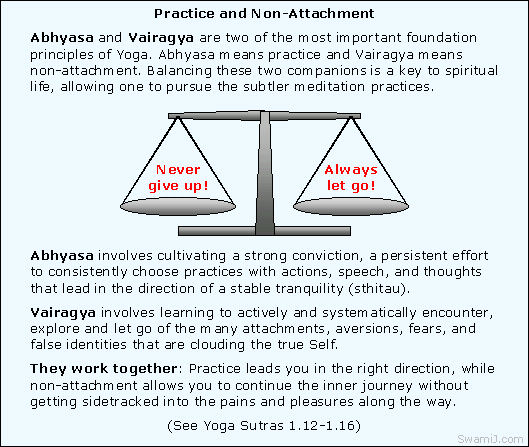
I do know that the guilt that comes with seeing money wasted in items you are not using and the visual clutter is literally making me depressed and anxious and holding me back from feeling more free and vibrant spiritually and emotionally. So, in some cases, I guess we have to choose to take care of our health first, well being and lifestyle first, then we can help the world. This article about the yogic principles of abyasa (pratice) and vairagya (non-attachment) helped me a great deal to come to this conclusion. Additionally, this article from dailydownwarddog.com about an experience in vairgya can make it easier to understand if the previous article is too theoretical. These principles state that to grow spiritually, we not only have to let go of physical objects, but also the aversions, fears and false identities that are clouding the true self. I do believe that my guilt at money wasted in the past and about harming the environment in the present/near future due to these past decisions come into this category. I am no longer an excessive consumer. I was only that way for a few years, and that concept proved false and un-fulfilling. We cannot go back and change our decisions or the past, but we can live more mindfully now and in the future with the choices we make daily. In letting go of items I cannot use and do not use, I am letting go of that false illusion that possessions can satisfy or fill a hole. In making sustainable and anti-consumerist choices now and in the future, I am applying abhyasa (practice), so that my actions are more in line with my authentic self. After I get rid of these unusable items, I also plan on challenging myself further regarding the remaining items because although I may use them all from time to time, how much do I actually NEED and what can I do without.
What do you think? How do you come to grips with the decision to be Sustainable vs Minimizing?
Nov 8, 2011
Elegant Simplicity
Elegance and Simplicity. Not two concepts that people would naturally group together. Most people see elegant as superfluous luxury and overly concerned with image. Meanwhile, we envision the Amish, Mahatma Gandhi or farmers when we think of living simply. However, I have always believed than a simple, but elegant way of living would bring the most long term value. Minimalism, with just a small handful or possessions or living out of a backpack, though a dream and viewed with admiration by some like me, is not always attainable in the jobs that we hold or the life situations that we are in. However, as I have witnessed myself, having too many things or wanting more things leaves one with a sense of lacking and even results in frustration in having to worry for and care for so many things. I have one two many stories of trying to find things in my small apartment, which should have been a breeze, but I had too much clutter. It is also frustrating when in trying to live a simpler life, I have had to repurchase many items because I was being frugal and purchased a lesser quality. So, trying to live a simpler life seems best aided by buying the best quality and most durable items so that what you have is the best and don't have to purchase replacements often, but that you keep only things that you use regularly. I am not talking about just buying name brand items, as I have seen one too many people buy items made of inferior items just because it is of a certain brand.
For instance, a friend/acquaintance who is brand obsessed showed me two dress that she purchased at Nordstrom for over $200 each made of polyester. We have very different values and don't see eye to eye on may things, so I knew lecturing her about her choice wouldn't make a difference, so I refrained. However, I knew that I could easily get a silk or cotton no-name dress for the same price or less, which would last longer and will actually decompose in the environment more naturally than the polyester one would. Not to mention, in the production of synthetics, workers risk respiratory illness due to the fumes of making and working with synthetics. I know that silkworms are harmed in producing silk, unless you have the budget to buy organic silk, but we do have to choose our battles as our life permits.
In any case, were I in her place, I would have chosen to buy a silk or cotton dress at the same or lesser price. Even if she was hell bent on getting a brand because she felt that it is constructed better as some brands are (in her case, though she is not a bad person, she is misguided by being very ego/image centric because she often judges her & others' worth/status on the brands they wear or how expensive the items are), there are better alternatives for that price if you look, and it would add more value in terms of durability and the impact on the environment. An alternative choice like that would be a choice in line with elegant simplicity.
Check out this great article on planet green that explores Elegant Simplicity and also this article called The Tyranny of Trends in the Resurgence magazine that explores how harmful the obsession with fashion and consumerism is for the environment.
For instance, a friend/acquaintance who is brand obsessed showed me two dress that she purchased at Nordstrom for over $200 each made of polyester. We have very different values and don't see eye to eye on may things, so I knew lecturing her about her choice wouldn't make a difference, so I refrained. However, I knew that I could easily get a silk or cotton no-name dress for the same price or less, which would last longer and will actually decompose in the environment more naturally than the polyester one would. Not to mention, in the production of synthetics, workers risk respiratory illness due to the fumes of making and working with synthetics. I know that silkworms are harmed in producing silk, unless you have the budget to buy organic silk, but we do have to choose our battles as our life permits.
In any case, were I in her place, I would have chosen to buy a silk or cotton dress at the same or lesser price. Even if she was hell bent on getting a brand because she felt that it is constructed better as some brands are (in her case, though she is not a bad person, she is misguided by being very ego/image centric because she often judges her & others' worth/status on the brands they wear or how expensive the items are), there are better alternatives for that price if you look, and it would add more value in terms of durability and the impact on the environment. An alternative choice like that would be a choice in line with elegant simplicity.
Check out this great article on planet green that explores Elegant Simplicity and also this article called The Tyranny of Trends in the Resurgence magazine that explores how harmful the obsession with fashion and consumerism is for the environment.
False Success: Reducing attitudes & bevahiors to be your authentic self
One of my main goals in life is not success in terms of money or possessions because even when I earned more, I was still unhappy. I did not know it at the time, and thought that perhaps, it was the job itself or some difficult people with whom I worked. I made this conclusion with my many of my jobs. To my remorse, I realized many years later that it was not the job, but me. I was trying to get fulfillment out of what I was doing, rather than find fulfillment with being. I have never been enraptured with money or material possessions, and in the period of my life when I shopped a lot, it was to kill time, fill a hole or because I was trying to please others. So, since I knew that I did not undertake the jobs solely due to money, I could not figure out why I was depressed in a general sense and not happy doing work in a field I found interesting. I thought that perhaps my interest in the field had waned or that the field was too stressful for me. I thought that perhaps pursuing another interest would help, and tried two different fields, but I was left with the same discontent. In retrospect, some of the jobs were great jobs, and I met even greater people along the way. So, what I had to examine is what fulfillment and happiness meant to me.
What I eventually realized is that no interest or even noble goals, such as the goal of living a simpler life, achieving a graduate degree, contributing to the world and helping the environment, good goals as they are, are not enough to bring me peace, fulfillment and happiness. These goals and life pathways are simply conduits to help me achieve a more peaceful and content life. True maximization of my potential and peace for me, and I believe for many if not, all, can only be achieved through one goal: being and living a life that is in life with your authentic self in every way - in thoughts, in actions, in career, in family and social relationships and in the choices we make every day, including how we spend our time and consumer choices.
Even in our dealings with others, we must be authentic. This means not allowing people to continue to criticize, control or treat you in a manner that you are very uncomfortable with. At the end of the day, we are the only ones who can change how people treat us. We cannot be peaceful with others if we are not living authentically with them because resentment with build for ourselves or for them, and then there will be no growth.
So, aim to be a better, more authentic version of yourself and to live a more authentic life, not to gain money or title, because of fear of conflict or disapproval, but for yourself because only then can you achieve noble goals and make a difference in the world.
To understand who your authentic self truly is, please read this wonderful article by Dr. Phil.
What I eventually realized is that no interest or even noble goals, such as the goal of living a simpler life, achieving a graduate degree, contributing to the world and helping the environment, good goals as they are, are not enough to bring me peace, fulfillment and happiness. These goals and life pathways are simply conduits to help me achieve a more peaceful and content life. True maximization of my potential and peace for me, and I believe for many if not, all, can only be achieved through one goal: being and living a life that is in life with your authentic self in every way - in thoughts, in actions, in career, in family and social relationships and in the choices we make every day, including how we spend our time and consumer choices.
Even in our dealings with others, we must be authentic. This means not allowing people to continue to criticize, control or treat you in a manner that you are very uncomfortable with. At the end of the day, we are the only ones who can change how people treat us. We cannot be peaceful with others if we are not living authentically with them because resentment with build for ourselves or for them, and then there will be no growth.
So, aim to be a better, more authentic version of yourself and to live a more authentic life, not to gain money or title, because of fear of conflict or disapproval, but for yourself because only then can you achieve noble goals and make a difference in the world.
To understand who your authentic self truly is, please read this wonderful article by Dr. Phil.
Subscribe to:
Posts (Atom)